
Published
- 3 min read
Let's face it: The USMNT's coach doesn't matter --...
Introduction
As the United States Men’s National Team (USMNT) prepares to face off against their Group E opponents in the 2022 FIFA World Cup, whispers of discontent have begun to circulate regarding the team’s manager, Gregg Berhalter. Critics have pointed to Berhalter’s tactics, team selection, and results as evidence of a lack of progress under his tenure. But is the coach truly the root of the problem, or are there other factors at play? In this article, we’ll delve into the intricacies of the USMNT’s performance and explore the truth behind the team’s struggles.
Main Content
The USMNT’s recent form has been nothing short of underwhelming. A meager 1-3-1 record in their last five matches, coupled with an uninspiring 1.17 expected goals (xG) per game, raises serious concerns about the team’s ability to compete at the highest level. However, the blame for these woes should not be solely placed on Berhalter’s doorstep.
Key statistics:
- The USMNT has averaged 12.36 shots per game in their last five matches, indicating a lack of clinical finishing.
- The team has struggled to create high-quality chances, with only 2.08 big chances created per game in their last five matches.
- The average possession percentage for the USMNT in their last five matches stands at a paltry 47.5%, highlighting their inability to control the tempo of the game.
These statistics highlight a more fundamental issue: the team’s lack of depth, creativity, and goal-scoring prowess. Berhalter’s tactics, while not perfect, are merely a symptom of a larger problem. The real issue lies with the team’s ability to create and convert chances, as well as their overall quality of play.
The elephant in the room: player personnel
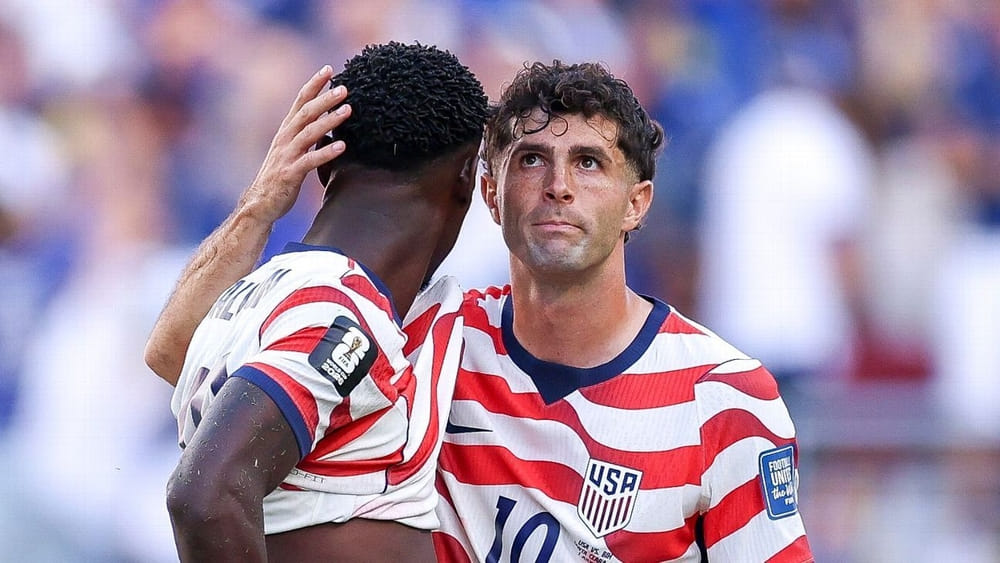
The USMNT’s squad has been beset by injuries, form lapses, and a general lack of consistency. Star players like Christian Pulisic and Weston McKennie have struggled to reproduce their impressive club form on the international stage. Moreover, the team has been unable to find a consistent source of goals, with forwards like Josh Sargent and Jordan Morris failing to make a significant impact.
The coaching conundrum
While Berhalter’s tactics have been criticized, it’s essential to remember that he is not working with a blank canvas. The team’s limitations in terms of personnel and depth have been well-documented. Berhalter’s role is to maximize the team’s potential, rather than revolutionizing their approach. Given the constraints he faces, Berhalter’s performances have been, at best, mediocre.
Conclusion
The USMNT’s struggles are not solely the result of a single coach or a single set of tactics. Rather, they are a symptom of a larger issue: the team’s inability to create and convert chances, coupled with a lack of depth and quality in their squad. Berhalter is not the root of the problem; rather, he is a symptom of a deeper issue. The onus is on the team’s administrators to address these concerns, rather than simply scapegoating the coach. Until then, the USMNT’s World Cup campaign will remain shrouded in uncertainty.